ThatWare AI
CATEGORY

AI Stack

Exploring all insights, frameworks, and engineering updates categorized under AI Stack.

Oct 16, 2026 • 26 min read

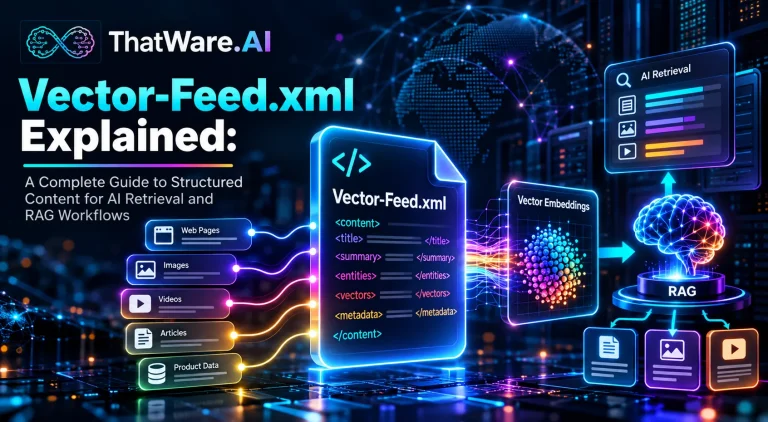
Vector-Feed.xml Explained: A Complete Guide to Structured Content for AI Retrieval and RAG Workflows

Why AI Retrieval Needs Structured Website Content? Websites contain valuable information in blogs, product documentation, knowledge bases, FAQs, and service pages. However, making that information available to a search or retrieval system involves more than publishing a page. A downstream system may need to extract the content, identify its sections, preserve its source, and prepare […]

Oct 16, 2026 • 24 min read

Understanding ai-manifesto.json And Its Role in AI Readiness

Businesses are entering a new era of digital discovery. AI-powered search engines, conversational assistants, and intelligent applications are changing how people find and evaluate information. To remain discoverable, organizations need more than useful website content. They need clear, consistent, and accessible information that automated systems can interpret. This is where ai-manifesto.json becomes relevant. It offers […]

Oct 16, 2026 • 53 min read

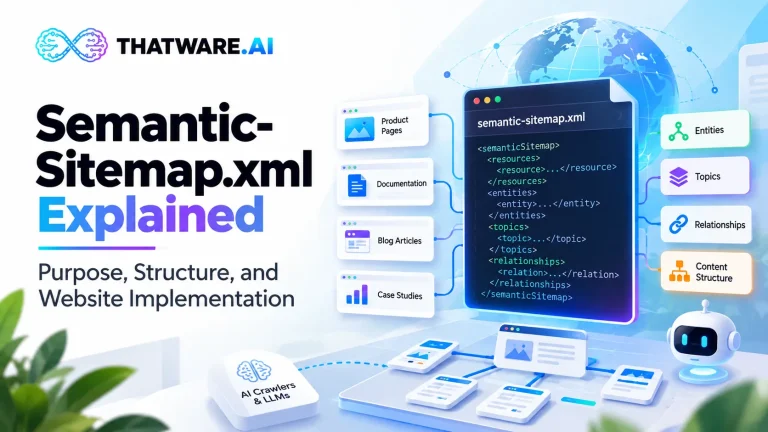
Semantic-Sitemap.xml Explained: Purpose, Structure, and Website Implementation

A website can contain thousands of useful pages and still make it difficult for machines to understand how its information fits together. Product pages may reference technical documentation, blog posts may explain individual features, case studies may demonstrate business outcomes, and company pages may establish organizational expertise. Although these resources exist on the same website, […]

Oct 16, 2026 • 30 min read

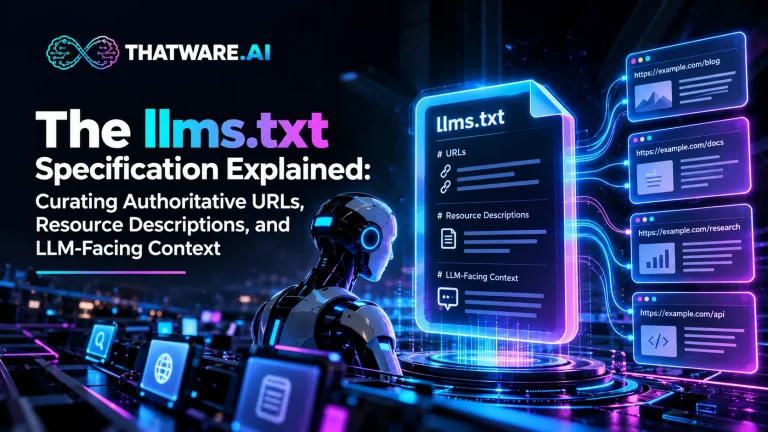
The llms.txt Specification Explained: Curating Authoritative URLs, Resource Descriptions, and LLM-Facing Context

The way websites communicate information to machines is evolving. Traditional web architecture helps browsers render pages and gives search engines mechanisms to discover URLs, interpret metadata, and crawl content. However, AI assistants, language-model-based agents, and retrieval systems may need a more direct way to identify a website’s purpose, locate its most useful resources, and understand […]

Oct 16, 2026 • 33 min read

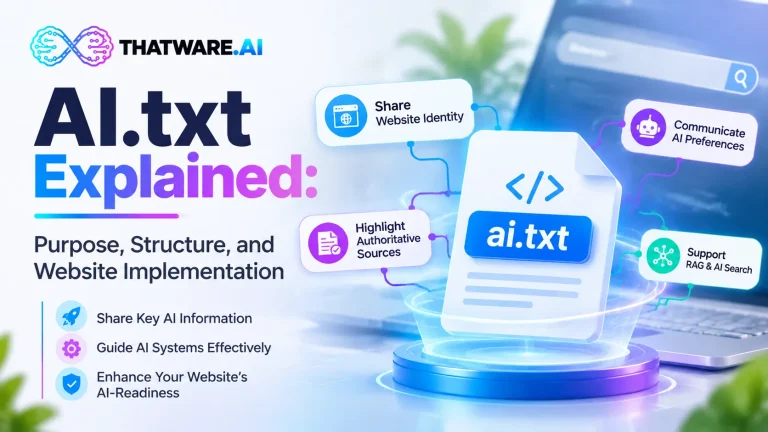
AI.txt Explained: Purpose, Structure, and Website Implementation

Websites were primarily designed for human visitors and conventional search engines. Their information is organized through navigation menus, landing pages, blog posts, product descriptions, metadata, structured data, internal links, and XML sitemaps. This architecture works well for many established web discovery processes, but it creates a different challenge when organizations want to communicate their AI-related […]